
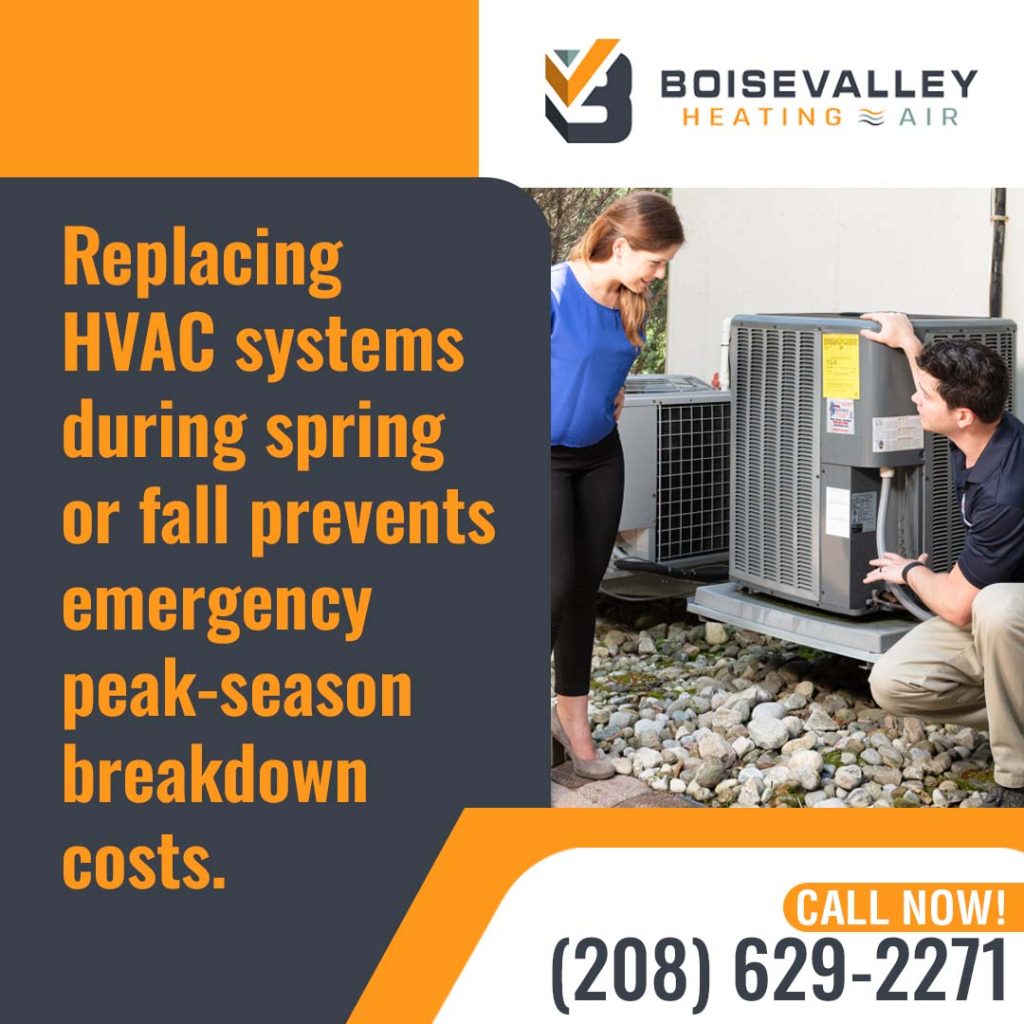
Spring and fall are the best times to replace an HVAC system. Mild temperatures mean you’re not left without heating or cooling during installation, and lower demand for replacement often means faster scheduling and better pricing from your local company.
At Boise Valley Heating & Air, we help Nampa homeowners plan replacements around these shoulder seasons to get the most value out of the timing.
Why Are Spring and Fall the Best Times for HVAC Replacement?
Spring and fall sit between peak cooling and heating seasons, which makes them the lowest-demand months for HVAC installation.
ENERGY STAR recommends scheduling a cooling system check-up in spring and a heating system check-up in fall, since contractors have more time to do thorough sizing, testing, and installation work when they aren’t buried in emergency calls.
A few reasons these shoulder seasons work in your favor:
- Mild weather means going a day or two without heating or cooling is a minor inconvenience, not a crisis.
- Contractors have more scheduling flexibility, so your HVAC installation can happen on your timeline instead of theirs.
- Manufacturers often release seasonal rebates and financing promotions during slower months to keep business steady.
- Technicians can focus fully on your job instead of splitting attention across multiple emergency calls.
What Happens If You Wait Until Summer or Winter to Replace Your System?
Replacing a system during peak summer heat or a hard winter freeze creates problems beyond just discomfort.
Demand for HVAC replacement spikes during these months, since more systems fail under extreme temperature stress. That surge affects three things at once:
- Scheduling delays. Emergency repairs take priority over planned replacements, so your installation date may get pushed back.
- Higher prices. Peak-season demand means less room for discounts, and manufacturer promotions are less common when everyone needs a system right now.
- Uncomfortable downtime. Going without air conditioning during a heat wave or without heat during a cold snap is far more disruptive than the same gap in milder weather.
If your system fails unexpectedly in July or January, replacement obviously can’t wait for a better season. But if you can see the signs coming, planning avoids all three of these problems.
How Does Timing Affect Pricing and Scheduling in Nampa?
Local HVAC experts in Nampa see the same seasonal pattern every year: summer and winter bring a rush of replacement calls, while spring and fall stay comparatively quiet. That quieter stretch is exactly when a homeowner has the most leverage — more available appointment slots, more attention from the technician doing the work, and a better shot at catching a manufacturer rebate.
At Boise Valley Heating & Air, we walk homeowners through residential HVAC solutions sized for the Treasure Valley’s specific summer and winter demands, and we recommend scheduling replacement before the season that stresses your system most, not after it fails.
When Should You Replace Regardless of Season?
Waiting for the “perfect” season isn’t always the right call. Consider replacing your HVAC system if you notice:
- Frequent breakdowns that require repeated repairs
- Repair costs approaching the price of a new system
- A system nearing or exceeding 15 years of service
- Performance issues during peak heating or cooling seasons
- Higher energy costs without increased comfort
- Risk of unexpected failure when demand is highest
Our team of HVAC contractors helps homeowners make informed replacement decisions by evaluating system condition, repair costs, and efficiency needs to recommend the right solution.
Questions we Usually Answer
Can I replace my HVAC system in the middle of summer if it breaks down?
Yes. Emergency replacement is always available, but expect less scheduling flexibility and fewer promotional discounts compared to spring or fall.
How far in advance should I schedule a spring or fall replacement?
A few weeks to a couple of months ahead is ideal, since even shoulder-season appointment slots fill up as the season progresses.
Does replacing my system in the off-season affect the installation quality?
No. Off-season timing affects pricing and scheduling, not workmanship. A qualified HVAC company delivers the same installation standards regardless of the time of year.

Plan Your Replacement Before the Next Season Hits
The best time to replace your HVAC system is before you’re forced to, not after it fails during the week you need it most.
Don’t wait for a breakdown. Contact our local HVAC contractors for proactive solutions that help extend your system’s life.
Call Boise Valley Heating & Air at (208) 629-2271 or email contact@boisevalleyhvac.com for a free estimate, and let’s find the right season and the right system for your home.